Across retail, the rules are changing.
Traditional store models built around dense assortments and passive merchandising are giving way to experience-led, digitally connected, service-oriented environments. Retailers are re-strategizing not because physical stores are failing. They are re-strategizing because the role of physical stores is changing.
Stores are no longer just destinations for inventory. They are becoming experience centers, fulfillment nodes, and sources of customer insight within broader omnichannel ecosystems.
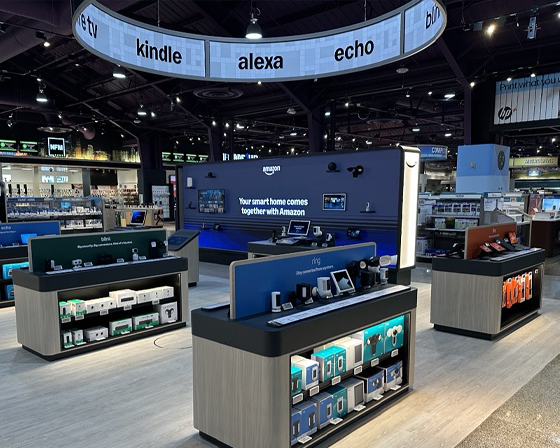
This shift is happening across categories and formats. Stores like Best Buy are among the clearest examples of how retailers are redefining what "in-store" needs to deliver. Brands that show up inside those retail environments need to evolve alongside them.
At Darko, we have been designing, engineering, and activating programs inside these evolving environments for years. Many of the capabilities retailers now prioritize: experience, measurement, flexibility, and scalability are already built into how we work.
The New Retail Reality: Fewer Products, Higher Expectations
Retailers are actively rethinking footprint, assortment, and navigation. The trend is consistent:
- Smaller, more curated physical stores
- Tighter assortments focused on top-performing categories
- Clearer storytelling and easier product comparison
- Strategic placements reserved for programs that perform
In this model, every square foot matters. Whether a brand occupies a dedicated store-within-a-store environment, anchors a high-traffic end cap, or holds position in an in-line fixture run, the expectations are the same: the space must earn its place.
Fixtures and branded spaces are decision drivers. Retailers expect in-store experiences to improve customer satisfaction, validate quality, and help shoppers feel confident in their choices.
Stores like Best Buy reflect this broader shift. Their move toward curated formats, elevated storytelling, and experience-driven layouts mirrors what many retailers now pursue to reduce friction, increase foot traffic, and drive sales.
The Store's New Job: Bridge Digital and Physical
Modern shoppers do not separate online and in-store. They research digitally, compare options, then enter the store to confirm and complete the decision.
Retailers are responding by designing stores that:
- Extend digital discovery into physical space
- Support multiple fulfillment paths
- Integrate human expertise where it adds the most value
- Enable customers to start and finish their journey anywhere
The "digital-first, human-powered" model emerging at retailers like Best Buy reflects this direction. It is part of a larger retail movement toward omnichannel orchestration. The physical store is not the end of the in-store customer journey. It is a critical node within it.
Stores that generate physical retail data give brands and retailers the ability to understand traffic patterns, optimize store layouts, and connect in-store behavior to broader marketing strategies. Without that data layer, store-level performance remains invisible to the omnichannel stack.
In-Store Experience Alone Is No Longer Enough
Physical stores are one of the last under-instrumented channels in retail. As the industry moves toward accountability and measurement, in-store environments must begin generating signals, not just impressions.
Retailers are investing in retail media, data platforms, and performance-based partnerships. As they do, expectations for physical retail are rising. Experience still matters. But experience without insight is no longer sufficient.
Brands that surface shopper engagement data such as dwell times, interaction rates, attention signals are better positioned to defend space, justify investment, and optimize product placement over time.
The rise of store retail media makes this even more pressing. As retailers monetize in-store inventory alongside digital placements, brands need store-level measurement to compete in both channels.
At Darko, our work already reflects this reality. Through connected retail fixtures, sensor-enabled experiences, and interactive touchpoints, we help brands understand how shoppers engage. We measure how long they dwell, what they interact with, and where attention is earned.
This in-store engagement measurement capability turns physical retail into a measurable part of the omnichannel journey. It aligns with where retailers are headed, not where they have been.
In-store analytics closes a gap that digital platforms cannot fill on their own. Digital channels have attribution. Physical retail, until now, has largely had impressions.
Retail fixture analytics changes that equation. It gives brands the performance data they need to support marketing campaigns and improve customer engagement at every square foot.
Why Execution Fluency Is a Competitive Advantage
As retail environments become more complex, so do the paths to activation. Retailers now expect partners to design experiences that are not only compelling but also:
- Compliant with evolving standards
- Flexible enough to support future change
- Engineered for repeatability and scale
- Operationally sound from day one
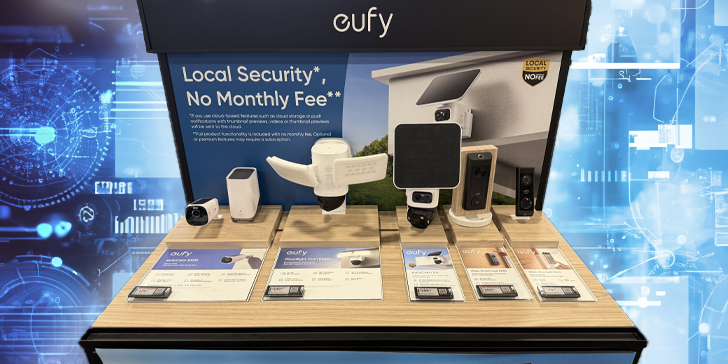
Good store operations depend on partners who understand the full program lifecycle. At Darko, our experience spans entire store ecosystems. We design and activate focal store-within-a-store environments, branded end cap programs, in-line fixtures, and modular platforms. We navigate workbacks, compliance requirements, prototype reviews, labeling, security, and store-ready rollout.
This level of fluency enables speed, confidence, and consistency. It is exactly what retailers and brands need as store formats and expectations continue to evolve.
Built for What's Next, Not Just What's Now
Retail's transformation is already underway. Retailers like Best Buy are showing what happens when stores operate as dynamic, connected parts of a broader ecosystem rather than static selling floors.
Brands that succeed in this environment invest in personalized shopping experiences, in-store retail measurement, and execution together. In-store analytics is not a future capability. It is a current competitive requirement.
At Darko, our services, technologies, and in-store platforms are already aligned to support that future. We have been designing for it all along.